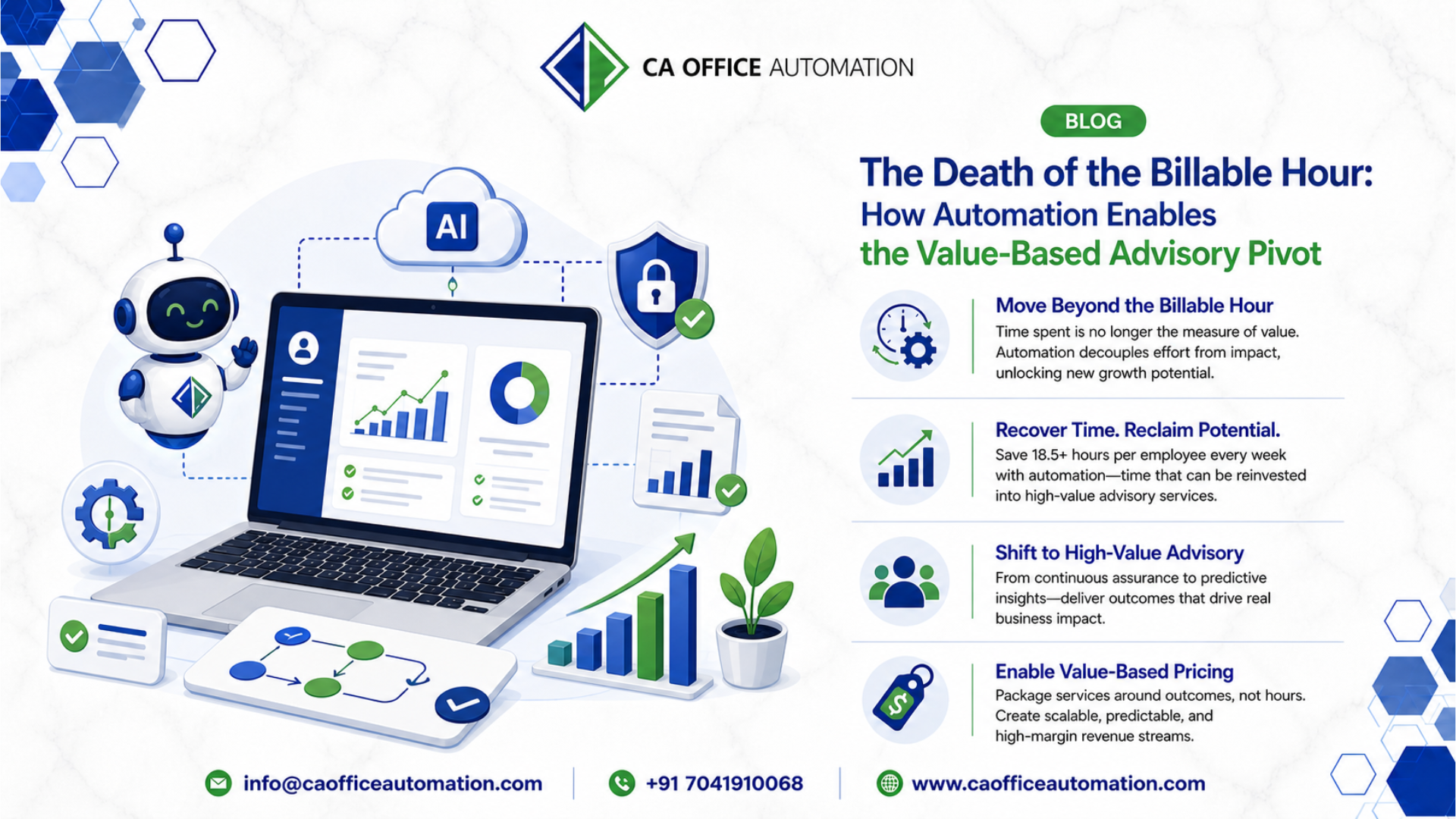
The Death of the Billable Hour: How Automation Enables the Value-Based Advisory Pivot
The “Great Decoupling” of 2026
The accounting industry is undergoing a fundamental shift. In 2026, technology has reached a point where software can execute tasks faster and more accurately than humans ever could.
This has created what can be called the Great Decoupling—where time spent is no longer directly linked to value delivered.
For modern firms, the traditional billable hour model is becoming a limitation. It caps revenue potential and ties growth to human capacity.
To scale effectively, firms must move toward value-based pricing, focusing on outcomes, insights, and business impact rather than hours worked.
Why the Billable Hour Model is Fading
The billable hour was built for a manual, effort-driven era. Today, automation has reduced the time required for core accounting tasks significantly.
When tasks that once took hours are completed in minutes, billing based on time no longer reflects the true value delivered.
Clients are also evolving. They are less interested in how long something takes and more interested in results, accuracy, and strategic guidance.
This shift is pushing firms to rethink how they price and position their services.
The 18.5-Hour Weekly Recovery Impact
Modern, integrated systems like CAOA enable firms to recover an average of 18.5 hours per employee per week.
This reclaimed time is not just operational efficiency—it is a strategic opportunity to expand advisory services and increase profitability.

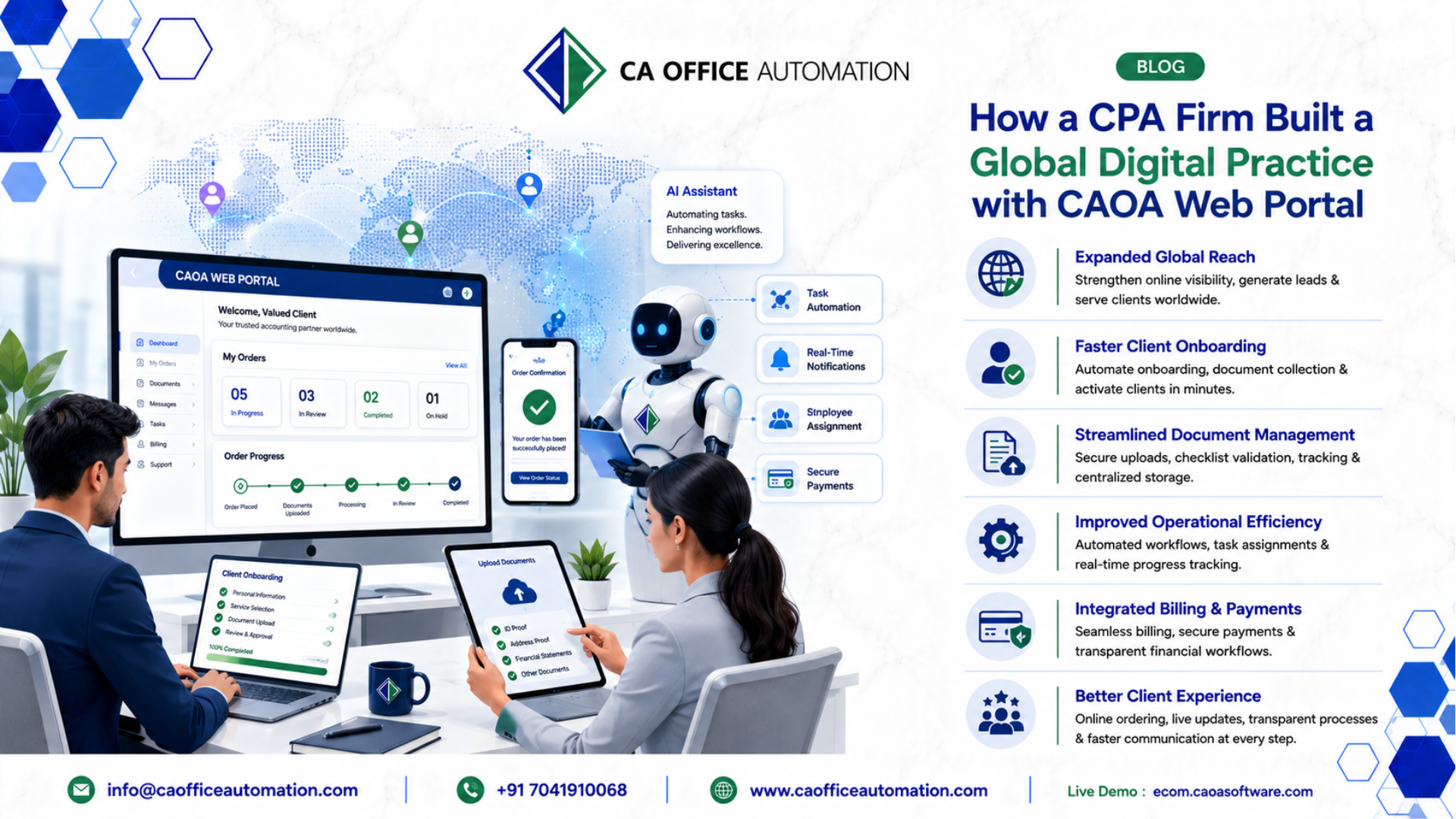
Digitalizing 90,000+ CA Office: A Transformative ICAI Partnership.
Where the Time Savings Come From
Client Chasing (3 Hours Saved)
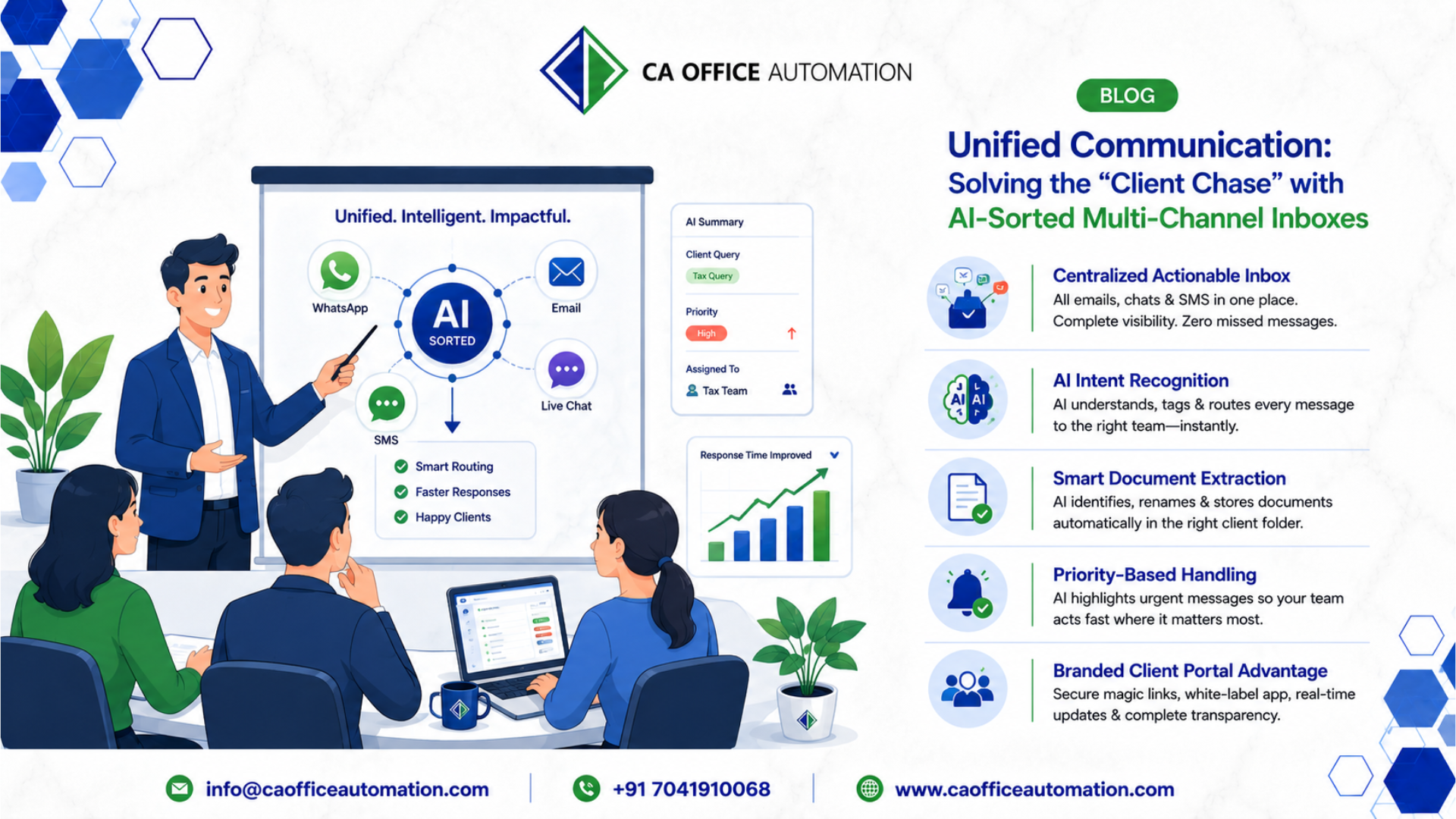
Automated reminders, notifications, and secure “magic links” eliminate repetitive follow-ups for missing documents.
Clients respond faster, and teams spend less time on manual coordination.
Email Management (3 Hours Saved)
AI-driven email triage prioritizes important communications and filters out noise.
Sentiment analysis helps teams identify urgency and respond more effectively.
Task and Work Management (3.7 Hours Saved)
Standardized workflows, templates, and auto-assigned dependencies ensure smooth execution without constant supervision.
This reduces the need for status meetings and manual tracking.
Document Processing and Classification
AI automatically extracts and categorizes data from financial documents, removing hours of manual entry work.
Internal Coordination and Review Cycles
Automated workflows streamline approvals and reviews, minimizing delays and back-and-forth communication.
From Efficiency to Revenue Growth
Recovering time is only the first step.The real opportunity lies in how that time is utilized.
Firms that reinvest these hours into high-value services can significantly increase their margins.
This is where the shift from compliance-focused work to advisory-led services becomes critical.
Digitalizing 90,000+ CA Office: A Transformative ICAI Partnership.
New High-Margin Advisory Streams
Continuous Assurance
Firms can move beyond periodic audits to real-time monitoring.
AI continuously scans transactions to detect anomalies, risks, and compliance issues as they occur.
Predictive Cash Flow Forecasting
Using machine learning, firms can analyze historical data and forecast cash flow for the next 30 to 90 days.
This helps clients make proactive financial decisions and avoid liquidity issues.
Scenario Modeling
“What-if” simulations allow firms to evaluate tax implications, expansion strategies, or investment decisions before they are executed.
This positions accountants as strategic advisors rather than just compliance professionals.
Real-Time Financial Insights
AI-driven dashboards provide ongoing visibility into business performance, enabling faster and more informed decisions.
Strategic Tax Planning
Instead of year-end tax preparation, firms can offer continuous tax optimization strategies throughout the year.
Enabling the Value-Based Pricing Model
With automation handling routine work, pricing can shift from time-based to value-based.
Firms can package services based on outcomes such as improved cash flow, reduced risk, or tax savings.
This approach aligns pricing with client expectations and creates predictable, scalable revenue streams.
The Role of CAOA in This Transformation
CAOA provides the integrated ecosystem required to enable this transition.
From workflow automation to AI-driven insights, it reduces operational burden while opening new advisory opportunities.
By combining efficiency with intelligence, CAOA helps firms move beyond traditional service models.
The Future: Advisory-Led Firms
The firms that succeed in this new era will be those that embrace automation and reposition themselves as advisors.
Compliance work will become increasingly automated, while human expertise will focus on interpretation, strategy, and decision-making.
This shift not only increases profitability but also strengthens client relationships.
Final Thought
The billable hour is no longer a sustainable growth model in an automated world.
Firms that adopt value-based pricing and leverage AI-driven efficiency will unlock new levels of scalability, profitability, and client impact.
The future of accounting belongs to firms that deliver value—not just time.
Final Thought
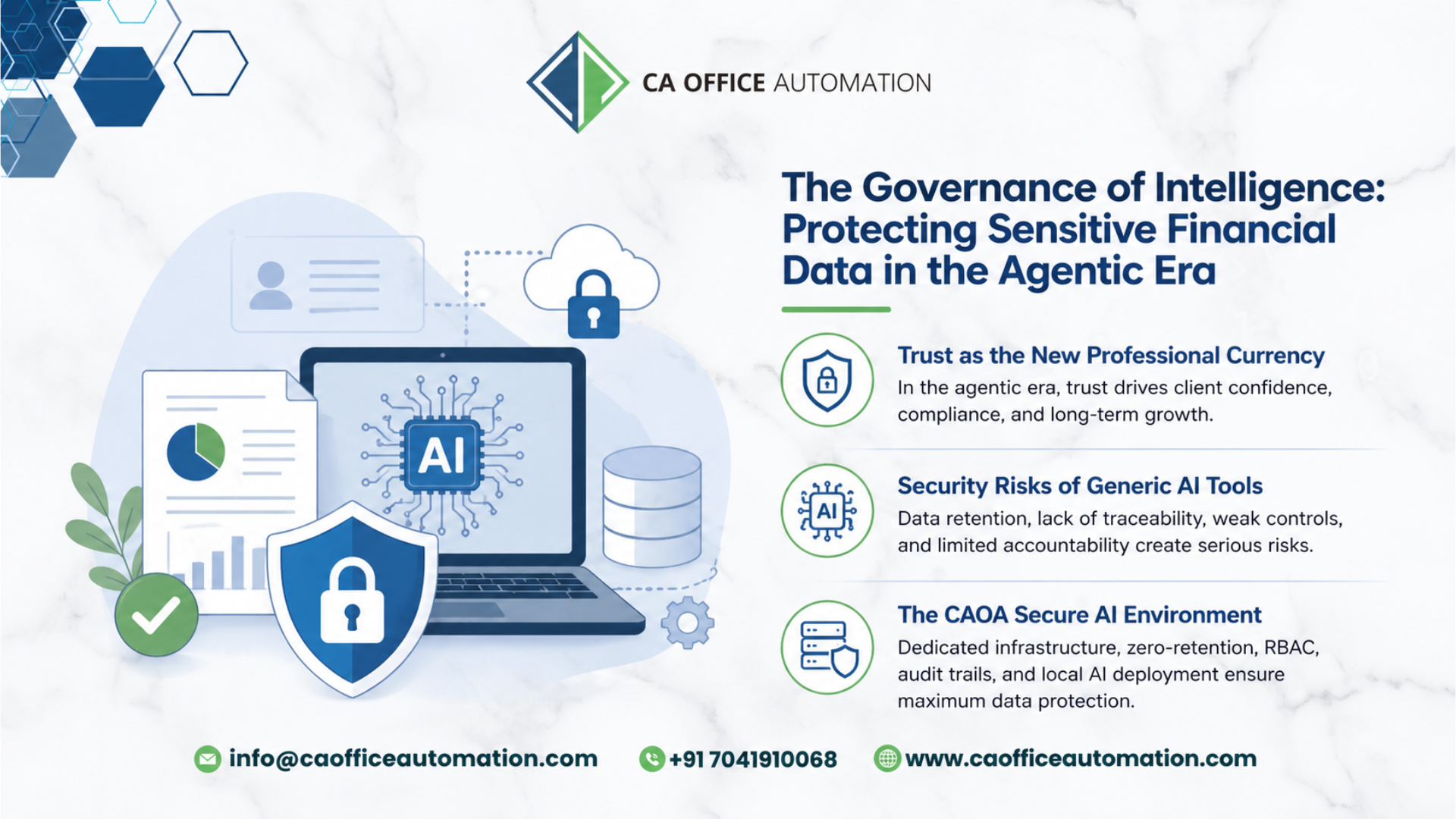
In the agentic era, intelligence alone is not enough—governance defines success.
Firms that invest in secure, transparent, and well-governed AI systems will lead the industry, building lasting trust while leveraging the full power of automation.